






Quick Summary
- Tim Cook will step down as Apple CEO on 1 September 2026.
- Cook will become Executive Chairman of Apple’s Board.
- John Ternus will take over as Apple’s new CEO.
- Johny Srouji has been named Chief Hardware Officer effective immediately.
- The move signals Apple’s next era will center on hardware, chips, and tighter ecosystem control.
Apple is entering one of the most important leadership transitions in its modern history. After 15 years as chief executive, Tim Cook is stepping down as Apple CEO and will move into the role of Executive Chairman of the Board effective 1 September 2026. Taking his place is John Ternus, Apple’s current Senior Vice President of Hardware Engineering, while longtime silicon leader Johny Srouji has been elevated to Chief Hardware Officer with immediate effect.
This is more than a routine executive reshuffle. It is a strong signal about where Apple believes its future lies. The company that spent the last decade expanding its services business, strengthening its ecosystem, and shifting to custom chips is now placing even more of its leadership power in the hands of hardware and silicon executives.
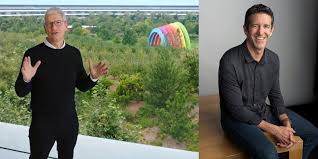
Tim Cook steps down as Apple CEO after 15 years
Tim Cook took over as Apple CEO in 2011 after Steve Jobs, inheriting one of the most scrutinized roles in global business. At the time, the central question was whether anyone could follow a founder as iconic as Jobs. Cook’s answer was not to imitate him, but to lead Apple in his own way: with operational discipline, supply chain mastery, and a steady hand that turned Apple into an even larger and more diversified company.
During Cook’s 15-year run, Apple grew not only through blockbuster hardware but also through software and services. The company continued to strengthen the iPhone, iPad, and Mac, while also scaling high-margin businesses such as the App Store, Apple Music, Apple Pay, and iCloud. Those services became critical to Apple’s revenue mix and helped reinforce the ecosystem that keeps users inside the company’s product universe.
Apple has described Cook’s tenure as a period of significant expansion across hardware, software, and services. That framing matters. Cook’s legacy is not just about selling more devices. It is about turning Apple into a platform company with multiple layers of customer lock-in, recurring revenue, and long-term strategic control.
Why Tim Cook’s legacy matters to Apple’s next chapter
Cook’s leadership changed Apple in ways that may be even more visible now that he is leaving the CEO role. He oversaw the company through enormous product cycles, global supply-chain pressures, geopolitical tension, and the maturation of the smartphone market. Through all of that, Apple remained one of the world’s most valuable and influential companies.

Perhaps the clearest symbol of Cook’s strategic vision was Apple’s transition to Apple Silicon. Moving the Mac away from Intel processors and toward chips designed in-house was one of the boldest moves of his era. It was not merely a technical change. It represented Apple tightening control over the heart of its devices.
That transition mattered because it gave Apple more power over performance, battery efficiency, product timing, and software optimization. In other words, Apple Silicon showed what happens when Apple controls more of the stack. It also proved that the company’s long-term direction depends heavily on deep integration between hardware, chips, and software.
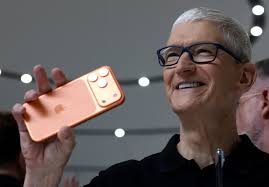
Seen in that context, the new leadership structure feels less surprising. Cook is stepping back from day-to-day executive management, but he is not walking away. As Executive Chairman of the Board, he will continue to shape Apple’s broader direction and provide continuity at a moment when the company is preparing for its next phase.
What Tim Cook will do as Executive Chairman
Cook’s move to Executive Chairman is significant because it allows Apple to manage succession without losing his experience, institutional knowledge, or strategic influence. He will continue leading Apple’s Board and contributing to the company’s future direction, giving the next CEO both room to lead and access to one of the most accomplished operators in tech history.
For investors, employees, and Apple watchers, that continuity should help make the transition feel deliberate rather than disruptive. Apple is not making a sudden break from the Cook era. Instead, it is extending parts of that era into a new structure where leadership can evolve while the company maintains stability.
Who is John Ternus, Apple’s new CEO?
John Ternus may not be a household name to casual consumers, but inside Apple he has long been seen as one of the company’s most important product leaders. Ternus joined Apple in 2001 and rose through the ranks to become Senior Vice President of Hardware Engineering, overseeing major product lines including the iPhone, iPad, and Mac.
That background makes him an especially credible successor. Apple is, at its core, still a company defined by products. And Ternus has been deeply involved in the engineering and execution of the devices that shape Apple’s brand and business. He understands not only how products are built, but also how they fit into Apple’s broader strategy of vertical integration.
Ternus is widely viewed as a natural successor because his experience lines up with the areas Apple appears to be prioritizing most: premium hardware, chip-driven performance gains, and tighter control over the full user experience. If Cook’s era was about scaling Apple into an ecosystem giant, Ternus’s era may be about deepening the company’s technical control over that ecosystem.
Why John Ternus looks like the right choice for Apple
The case for Ternus starts with continuity, but it does not end there. His oversight of hardware engineering gave him direct exposure to the product categories that still define Apple’s identity. More importantly, he has operated during the period when Apple’s hardware strategy became inseparable from its chip strategy.
That matters because Apple’s competitive edge increasingly comes from integrating custom silicon into devices designed around it from the beginning. Under this model, product leadership is not just about industrial design or yearly upgrades. It is about aligning chip capabilities, thermal design, software features, battery life, AI workloads, and manufacturing at scale.
Ternus has been close to all of those moving parts. That makes him more than a safe pair of hands. It makes him the kind of leader Apple would likely choose if it believes the next decade will be won through hardware-software-chip integration rather than through dramatic strategic reinvention.
Johny Srouji’s promotion adds another big clue
If Ternus becoming CEO is one major signal, Johny Srouji’s promotion is another. Apple has appointed Srouji as Chief Hardware Officer with immediate effect, elevating one of the most influential architects behind the company’s silicon strategy.
Srouji has played a central role in Apple’s chip development for years. His influence can be seen across the processors powering iPhone, iPad, Mac, and other Apple devices. As Apple Silicon became a defining advantage for the company, Srouji’s strategic importance only grew.
His new title suggests Apple wants even tighter alignment between hardware engineering and chip development at the highest level. That is a notable move because it reinforces the idea that Apple no longer sees silicon as a supporting component. It sees chip design as a core leadership function and a decisive competitive weapon.
What this Apple leadership transition says about the company’s future
The biggest takeaway from this Apple leadership transition is that the company appears to be doubling down on control. Control over chips. Control over hardware. Control over how devices, services, and software work together. That has been Apple’s direction for years, but this reshuffle makes it unmistakable.
Cook’s tenure proved that Apple could grow far beyond the iPhone by building a broader ecosystem and expanding services like the App Store, Apple Music, Apple Pay, and iCloud. But Apple’s next phase looks set to place renewed emphasis on the engineering foundations that make that ecosystem possible.
That does not mean services will matter less. It means Apple likely sees its future advantage in owning the underlying technologies that make those services more powerful, more efficient, and more tightly connected to its devices. In practical terms, that points to a company that will keep investing heavily in silicon, product integration, and platform lock-in.
Why the CEO change matters beyond the headlines
When people search for news about Tim Cook stepping down, the immediate question is obvious: what happens next? The answer, at least from Apple’s structure, is that the company wants evolution without instability. Cook stays involved as Executive Chairman. Ternus takes over as CEO. Srouji gains more authority over hardware. The message is one of succession planning, not crisis management.
Still, the symbolism matters. For years, Cook represented post-Jobs Apple. Now Apple is preparing for the post-Cook operating era, and it is doing so by elevating leaders whose reputations were built on making Apple devices faster, better integrated, and harder for rivals to match.
That suggests Apple believes its next growth engine will come less from grand narrative shifts and more from disciplined execution around core strengths. In that sense, this is a very Apple transition: controlled, strategic, and rooted in product leadership.
Final thoughts on Apple’s leadership transition
Tim Cook stepping down as Apple CEO marks the end of a major chapter, but not the end of his influence. His 15 years at the top reshaped Apple into a broader, more resilient company with powerful services, stronger ecosystem economics, and a breakthrough chip strategy that may define its future for years to come.
By naming John Ternus as CEO and promoting Johny Srouji to Chief Hardware Officer, Apple is making a clear statement about what comes next. The company’s future will be guided by leaders who understand hardware at the deepest level and who have helped build the silicon foundation behind Apple’s most important products.
For anyone watching the company closely, that is the real story behind the Apple CEO step down. This is not just a changing of names at the top. It is Apple revealing, in unusually direct form, what it thinks its next decade will be built on.