





Football Australia received a high-profile boost at its AGM when FIFA president Gianni Infantino delivered a surprise prerecorded message praising its progress. But behind the warm words, the meeting laid bare a much tougher reality: projected losses, staff cuts, unresolved governance tension, and real uncertainty over when the organisation will return to financial stability.
- Gianni Infantino praised Football Australia for reconnecting ‘old soccer and new football’
- Football Australia is projecting a $5 million loss in 2026 after a previously reported $15.3 million loss
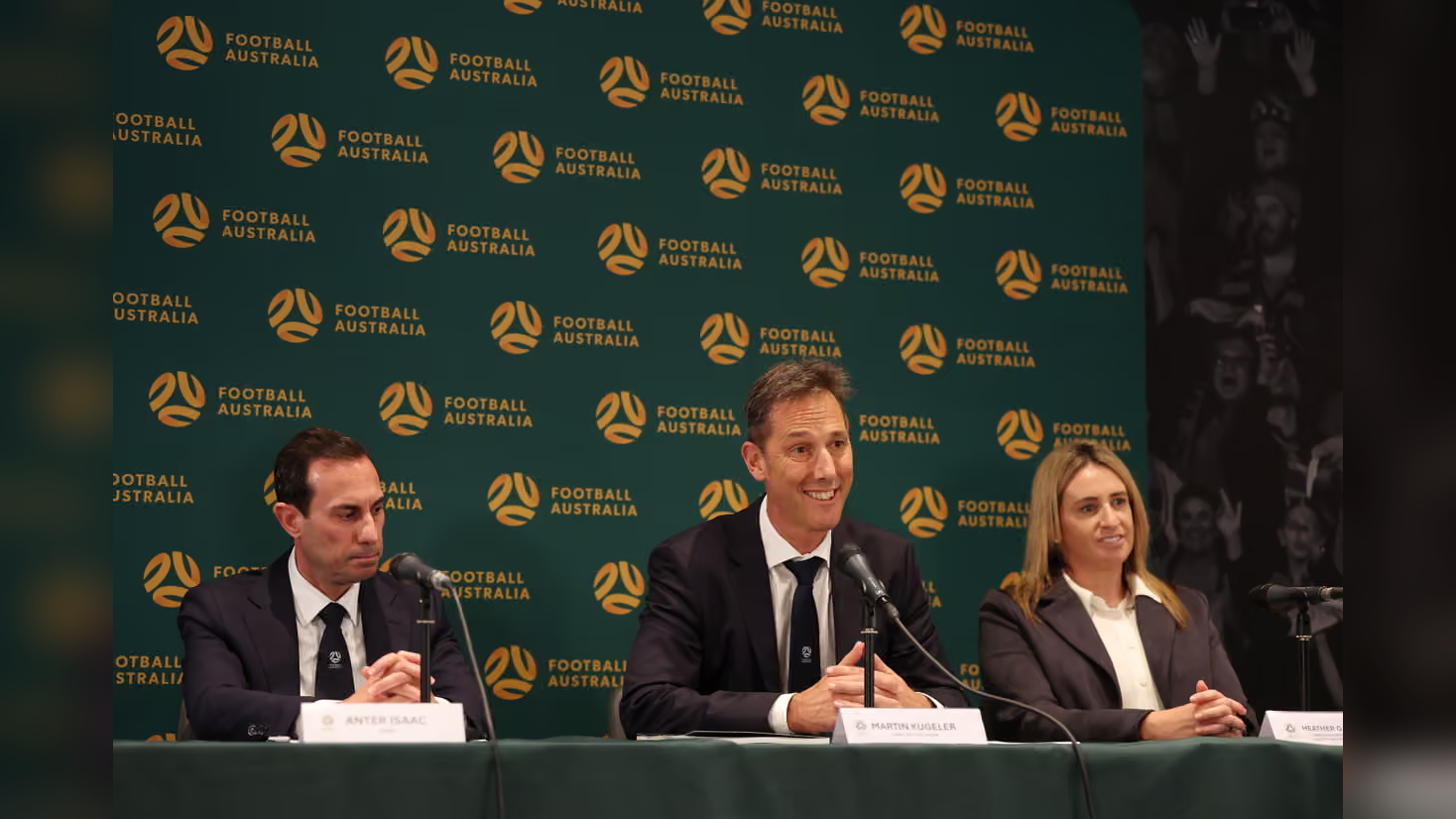
- CEO James Johnson and chair Anter Isaac defended the numbers, arguing last year’s operating deficit looks smaller once one-off and non-cash items are removed
- Roughly 20 jobs are being lost as the organisation cuts spending
- Football Australia does not expect to break even until 2027
- The AGM also exposed boardroom politics, integrity funding pressure, and unanswered questions about long-term governance
Why the Football Australia AGM mattered
For anyone searching Football Australia financial pain FIFA Infantino message, the key story is the contrast. On one side was FIFA’s public endorsement. On the other was an AGM that highlighted how fragile Football Australia’s financial and governance position still looks.
This matters not just to administrators, but to fans, clubs, A-League stakeholders, sponsors, and even betting markets that track the health of Australian football competitions. A financially stable governing body usually helps support scheduling certainty, competition integrity, commercial confidence, and stronger long-term planning.
Gianni Infantino’s surprise video message brought praise from FIFA
One of the biggest talking points from the AGM was a surprise prerecorded video from FIFA president Gianni Infantino. His appearance gave the meeting a polished international backdrop and signalled that FIFA still wants to publicly back Football Australia.
Infantino praised Football Australia for what he described as “reuniting old soccer and new football”, a phrase loaded with symbolism in the Australian game. It spoke to the long-running divide between traditional community-rooted football culture and the modern national administration model that has tried to professionalise the sport.
That message was clearly designed to present Football Australia as a body moving forward, healing old fractures, and building alignment across the game.
Infantino’s Australian Championship comments were especially notable
Infantino also highlighted the proposed Australian Championship, presenting it as an important step in closing the gap between the first and second tiers of the game.
That point matters because one of the biggest structural issues in Australian football has been the disconnect between the A-Leagues at the top and the wider state-based and semi-professional pyramid below. If the Australian Championship works as intended, it could help create a more coherent pathway for clubs, players, and investors.
In theory, that is exactly the kind of reform FIFA likes to champion: stronger links between tiers, broader national reach, and a more integrated football ecosystem.
The real headline: Football Australia is still under major financial pressure
While the FIFA message sounded optimistic, the financial discussion at the AGM painted a much harsher picture.
Football Australia is projecting a $5 million loss in 2026. That forecast alone would have grabbed attention, but it becomes even more significant when placed next to the organisation’s previously reported $15.3 million loss.
The contrast was stark. Publicly, FIFA was celebrating progress. Internally, Football Australia was explaining why more losses are still expected and why the road back to stability remains slow.
Why a World Cup year is not delivering the usual uplift
Normally, a men’s FIFA World Cup cycle can help a national federation. Major tournaments often lift visibility and create opportunities for:

- new sponsorship deals
- higher merchandise sales
- commercial activations
- greater media attention
- broader fan engagement that can convert into revenue
So why is Football Australia still under pressure in a men’s World Cup year?
One major factor is cost. The 2026 FIFA World Cup in North America brings extra travel, accommodation, and logistics expenses. For an Australian organisation, distance matters. Sending teams, staff, support personnel, and operational units across North America is materially more expensive than attending a tournament held closer to home.
That means some of the expected upside from a World Cup year can be eroded by the practical realities of participation and event support.
Anter Isaac says the underlying loss was lower than the headline number
Football Australia chair Anter Isaac sought to give more context to the previously reported $15.3 million loss. His argument was that the operating deficit looked lower once one-off and non-cash items were stripped out.
This is an important distinction for readers trying to judge whether the federation is in temporary difficulty or dealing with deeper structural weakness.
In accounting terms, one-off costs may not repeat every year, and non-cash items do not always represent immediate money leaving the business. That can make the headline figure look worse than the underlying operating trend.
Still, even with that clarification, the bigger concern remains: Football Australia is continuing to lose money, is still tightening spending, and does not expect to fully stabilise quickly.
Football Australia is not expected to break even until 2027
Isaac said Football Australia is not expected to break even until 2027. That is arguably the clearest indicator of the challenge ahead.
For stakeholders, this means the current period is not just a short-term cash squeeze. It suggests a multi-year recovery timeline, with careful cost control and strong execution required just to get back to neutral.
That sort of timeframe also raises broader questions:
- Can the organisation keep investing in growth while cutting costs?
- Will commercial partners remain patient?
- How much strain will this place on governance relationships across the sport?
About 20 jobs are being lost as spending tightens
The pressure is not abstract. Around 20 jobs are being lost as Football Australia reduces spending.
Whenever a sports governing body cuts staff, it creates concerns beyond payroll savings. Job losses can affect delivery capacity in areas like competitions, community programs, compliance, commercial operations, and long-term planning.
It also sends a signal that the organisation is in serious cost-management mode rather than expansion mode.
That is why the upbeat FIFA messaging felt so disconnected from the lived reality revealed at the AGM.
The AGM board vote showed governance tension is still very real
The meeting was not only about finances. It also highlighted the ongoing politics around who gets influence inside Australian football.
Two A-League-backed nominees failed to win seats in the AGM board vote, underlining that the professional leagues do not automatically control outcomes at Football Australia level.
Rachel Wiseman was appointed deputy chair, while Paul Bittar secured a place on the board. Former Socceroo Mark Schwarzer withdrew before the vote, removing one of the more recognisable names from contention.
Even after the vote, the governance picture remains incomplete because two casual board vacancies still need to be filled.
Why the board result matters beyond personalities
This was not just a story about winners and losers. The board composition matters because Football Australia is trying to navigate financial repair, competition reform, integrity obligations, and political relationships with the Australian Professional Leagues and the wider football community.
At a time like this, board balance can shape:
- how aggressively costs are cut
- how commercial partnerships are pursued
- whether league and federation interests align or clash
- how much confidence external stakeholders place in the organisation
The gender balance amendment also has funding implications
Another important AGM development was the constitutional amendment requiring an even gender split on the board for eligibility tied to Australian Sports Commission funding.
This was more than a symbolic governance reform. It carries real financial significance because access to public sports funding can depend on meeting modern governance standards.
For Football Australia, that means board structure is not just an internal issue. It can directly connect to whether the organisation remains aligned with national funding expectations.
Integrity remains Football Australia’s responsibility — but the money has shifted
One of the most important and potentially underappreciated themes from the AGM was integrity funding.
Football Australia still holds responsibility for football integrity in Australia. That includes oversight connected to issues such as match integrity, betting-related risks, and broader regulatory safeguards across the game.
At the same time, Football Australia is working with the Australian Professional Leagues to build what Isaac described as “Asia’s best sports integrity ecosystem”.
That sounds ambitious, but it also highlights a funding and control dilemma.
Product fees now go to the A-Leagues, not Football Australia
A key complication is that product fees from betting companies now go to the A-Leagues rather than Football Australia.
That creates an obvious question: if the federation still carries integrity responsibilities, but a significant revenue stream linked to wagering and competition value is flowing elsewhere, how sustainable is the current model?
For readers interested in the betting side of football administration, this is one of the most practical issues in the entire story. Integrity systems are essential for any sport that interacts with bookmakers and betting markets. They require staffing, monitoring, technology, education, and enforcement.
If the cost sits with one body while part of the related revenue sits with another, tensions are almost inevitable.
FIFA praise versus Football Australia financial pain: the central contradiction
The biggest takeaway from the AGM is simple: FIFA’s message and Football Australia’s financial reality are not fully aligned.
Infantino’s message emphasised unity, reform, and progress. Those themes may be genuine. But the AGM showed an organisation still dealing with:
- projected ongoing losses
- recent major deficit figures
- staff cuts
- boardroom contestation
- funding pressure around integrity obligations
- uncertainty over the pace of recovery
That does not mean FIFA was wrong to praise Football Australia’s strategic direction. It does mean the public narrative of progress sits beside a much tougher operational reality.
Is this a reset, a warning sign, or both?
The broader question for Australian football is whether this moment should be seen as a reset, a warning sign, or both.
The optimistic reading is that Football Australia is taking painful but necessary steps now, absorbing losses, restructuring costs, improving governance settings, and trying to build stronger long-term foundations through initiatives like the Australian Championship and a more advanced integrity framework.
The pessimistic reading is that the game’s central governing body remains financially stretched, politically fragmented, and exposed to structural problems that cannot be solved by messaging alone.
The truth may sit somewhere in the middle.
There are signs of strategic intent. There is also clear evidence of strain.
What fans, clubs, and stakeholders should watch next
If you are trying to understand what happens after the AGM, these are the key issues to monitor:
- whether the projected 2026 loss stays near $5 million or worsens
- how effectively Football Australia manages job cuts without damaging core operations
- whether the organisation can reach break-even in 2027 as forecast
- how the remaining two casual board vacancies are filled
- whether relations with the A-Leagues improve or remain politically tense
- how integrity responsibilities are funded over the medium term
- whether the Australian Championship progresses from concept to meaningful structural reform
Final verdict on Football Australia’s AGM
Gianni Infantino’s surprise message gave Football Australia a headline-friendly endorsement, and his comments about reconnecting old soccer and new football, plus backing the Australian Championship, were politically and symbolically powerful.
But the AGM itself told a more complicated story.
Football Australia is still facing real financial pain. A projected $5 million loss in 2026, a recent reported $15.3 million loss, around 20 job cuts, unresolved boardroom dynamics, and an expected break-even point no earlier than 2027 all point to an organisation still under serious pressure.
So the honest reading is this: FIFA may see momentum, but Football Australia still has a lot to prove.
For the future of football governance in Australia, this moment looks less like a clean success story and more like a live stress test.