






Hundreds of BHP workers at Port Hedland in Western Australia have voted in favour of strike action, raising the risk of disruption at one of the world’s biggest iron ore export hubs. The vote does not mean a full shutdown is certain, but it does increase operational pressure on BHP at a site that is central to its Pilbara supply chain and export flow.
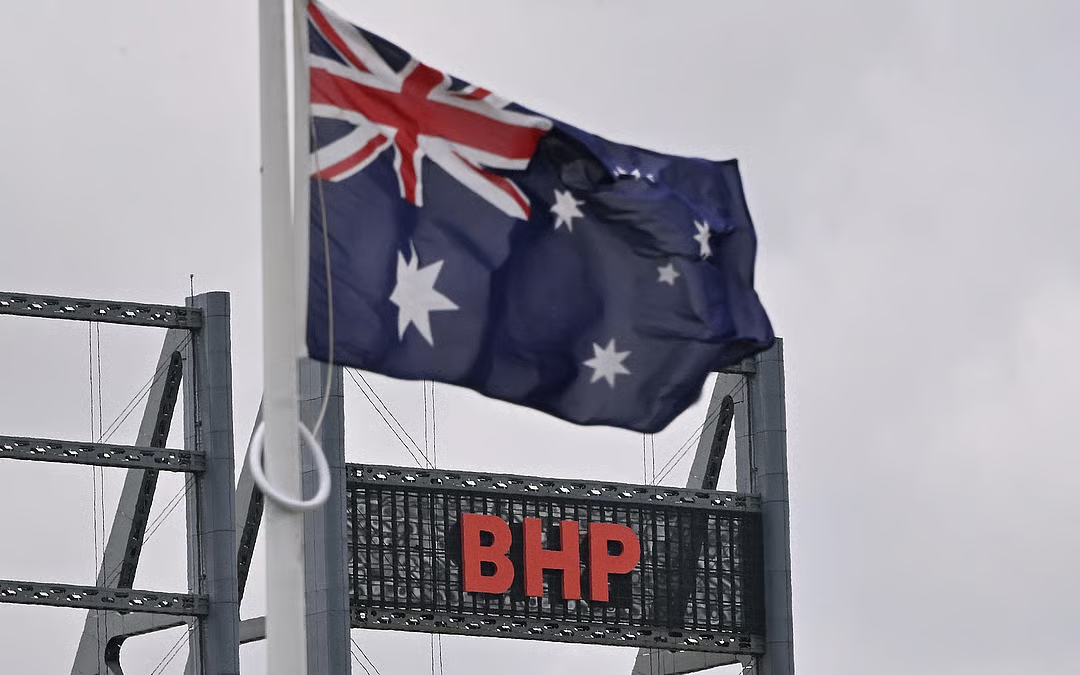
BHP Port Hedland strike risk grows after union vote
The industrial dispute involves workers represented by the Electrical Trades Union (ETU) and the Australian Manufacturing Workers Union (AMWU) at Port Hedland. According to the unions, ETU members who participated in the ballot voted unanimously in favour of industrial action, while AMWU members also voted strongly to back stoppages.
The result matters because Port Hedland is not just another mining site. It is one of the most important export gateways in Australia’s resources sector, handling huge volumes of iron ore from the Pilbara and supporting BHP’s Western Australian operations.
What workers are demanding from BHP
The dispute has been running for months as workers and BHP negotiate over pay and conditions. Union representatives say employees are seeking a formal agreement that delivers improved wages, clearer conditions and more consistency across the workforce.

A key union argument is that workers with similar skills and experience are currently employed on inconsistent individual contracts. In the unions’ view, that has created uneven outcomes on pay and conditions for employees doing comparable work.
That position has become a central issue in the bargaining process, with labour representatives pushing for an agreement that better standardises terms at the critical export site.
What type of industrial action could happen?
If action goes ahead, stoppages could range from 30 minutes to 24 hours, depending on the notice issued and the form of protected industrial action chosen. Any action would only be able to begin after the required notice period.
At this stage, it is important not to overstate the immediate impact. The ballot authorises industrial action, but it does not confirm that workers will launch prolonged stoppages or that shipments have already been affected.
Still, even short work interruptions at a major export terminal can draw close attention from miners, traders, customers and logistics operators.
Why Port Hedland matters to Australia’s iron ore supply chain
Port Hedland is one of the world’s largest iron ore loading ports and a vital link in BHP’s Western Australian iron ore export system. Ore mined across the Pilbara moves through a tightly coordinated chain of rail, stockyards, shiploading infrastructure and marine logistics before reaching global buyers.
That makes labour stability at the port especially important. When bargaining tensions rise at a key node like Port Hedland, the market tends to watch closely because the site is deeply connected to export scheduling, vessel movements and broader supply chain planning.
Iron ore remains one of Australia’s most important exports, and BHP is one of the world’s largest miners. For that reason, even a limited disruption risk at Port Hedland can become significant from a business and market perspective.
Potential market impact if stoppages begin
No shipment disruption has been confirmed, and the extent of any future impact would depend on timing, duration and how BHP manages operations if industrial action proceeds. However, short stoppages at a hub of this scale can still affect sentiment because export systems are built around precision and volume.
Possible areas of concern include:
- loading delays for iron ore vessels
- pressure on port and rail scheduling
- higher uncertainty for near-term export volumes
- closer scrutiny from commodity markets and customers
Even if disruptions remain limited, the strike risk adds another layer of uncertainty to an industry where timing and throughput matter.
Union position and company response
The unions have framed the ballot as a response to drawn-out negotiations and what they describe as the need for fairer, more consistent employment terms. Their message is that workers are not simply seeking higher pay, but also a more structured and equitable agreement after months of bargaining.
BHP had not immediately responded at the time of writing. Its latest comment should be checked before publication if a new statement becomes available.
Why this dispute matters now
The Port Hedland strike vote puts fresh pressure on BHP after months of negotiations with workers at a strategically important export location. While full-scale disruption should not be assumed, the result clearly increases labour tension and operational risk around one of Australia’s most critical iron ore hubs.
In short, workers are pushing for better pay, improved conditions and a formal agreement, while BHP now faces the possibility of stoppages ranging from brief interruptions to longer action at a site central to its iron ore exports.